

How we review it
Your documents come first
Here is what we look at, in order.
- 01
Urgency and eligibility review
Identify the person’s location, status, prior claims, entry history, removal activity and any deadline before collecting a detailed narrative.
- 02
Claim and Basis of Claim preparation
Prepare accurate forms and a chronological account, explain material gaps or inconsistencies and preserve evidence securely.
- 03
Evidence and disclosure
Organize personal evidence and relevant country-condition material and submit it using the IRB’s current rules and instructions.
- 04
Hearing preparation and representation
Review the record, likely issues and hearing procedure, and represent the claimant before the IRB only within the authorized licence class and agreed scope.
In plain terms
How does a refugee claim in Canada work?
A person inside Canada or at a Canadian port of entry may ask for refugee protection when return would expose them to persecution or another risk covered by Canadian law. IRCC or CBSA first decides whether the claim can be referred. The Refugee Protection Division of the Immigration and Refugee Board then decides the protection claim.
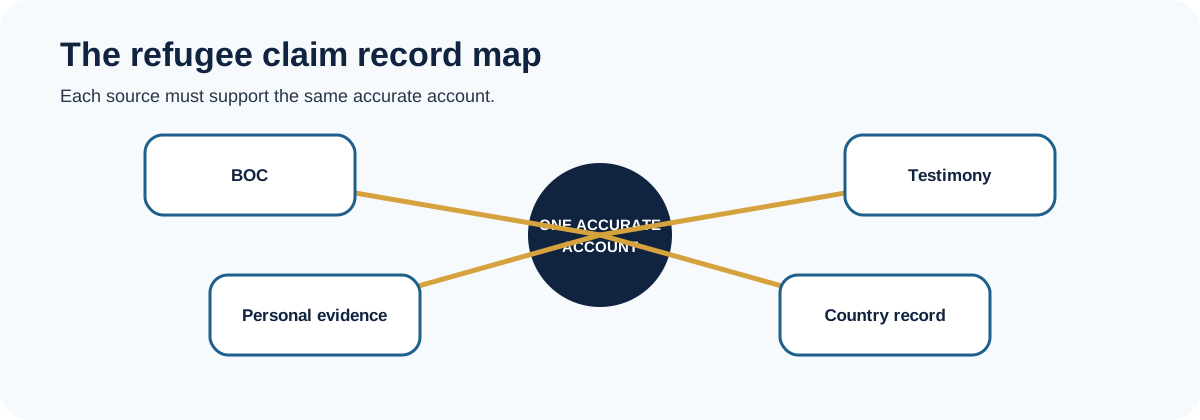
The Basis of Claim form, earlier immigration records, personal evidence and testimony must tell one accurate account. The process is not a general way to extend status, and resettlement from outside Canada is different. Deadlines can be short, so we first protect the filing date and collect detailed facts through a confidential process.
Who is this for?
You are in Canada and fear persecution because of race, religion, nationality, political opinion or membership in a particular social group. You face torture, a risk to life or cruel and unusual treatment that the law recognizes. You received claim forms or a hearing date and need the record reviewed.
A person outside Canada cannot file an in-Canada claim through this office; read IRCC’s resettlement information instead. A negative RPD decision belongs on the appeals page, and a CBSA invitation belongs on the PRRA page.
What does an immigration officer check?
The officer checks whether you meet the legal requirements and whether the records support the application you submitted.
Can the claim be referred to the IRB?
IRCC or CBSA checks legal eligibility before the RPD can hear the claim.
Prior claims, protection in another country, serious criminality and the Safe Third Country Agreement can affect referral. The entry route and immigration history need exact review.
Does the feared harm fit a protection ground?
The claimant must connect the personal risk to the Convention refugee or person-in-need-of-protection test.
General hardship or a wish to remain in Canada is insufficient. The account must explain who poses the harm, why the claimant is targeted and what would happen on return.
Could the state protect the claimant?
The RPD examines whether effective protection is reasonably available in the home country.
A claimant who did not seek help may need to explain why. Police reports can matter, but country evidence and the person’s own experience must be assessed together.
Could the claimant live safely elsewhere in the country?
The RPD may examine whether another location is safe and reasonable for this person.
The answer depends on reach, identity, health, family circumstances and conditions in the proposed place. A generic statement that the country is dangerous does not answer the location question.
Is the account credible and consistent?
The member compares the BOC, testimony, documents, prior visa records and conduct after the alleged events.
Dates can be forgotten, but material contradictions need honest explanations and supporting records. Copied narratives and altered evidence can destroy a claim and create misrepresentation consequences.
What evidence makes the application easier to assess?
Good evidence answers a specific concern and agrees with the forms, dates and amounts elsewhere in the file.
Personal chronology
What it needs to prove: What happened, who was involved and why the claimant fears return.
What leaves questions: A polished narrative with dates that conflict with passports and visa forms.
What answers them: A dated account built from the claimant’s memory, travel record, messages and contemporaneous documents.
Identity and profile
What it needs to prove: Who the claimant is and why that identity, belief or activity matters.
What leaves questions: A membership card without history or independent context.
What answers them: Identity records, participation over time, witnesses and country evidence that fits the claimed profile.
Protection efforts and relocation
What it needs to prove: Why authorities or another part of the country cannot provide a reasonable answer.
What leaves questions: The sentence “police do nothing” with no personal attempt or explanation.
What answers them: Reports, complaints, outcomes, expert or country evidence and a personal explanation of barriers.
Current country conditions
What it needs to prove: Whether the feared risk remains connected to objective conditions.
What leaves questions: News about unrelated events or undated social-media posts.
What answers them: Current IRB National Documentation Package material and reliable reports linked to the claimant’s facts.
A composite example
A claimant says political activity began in 2022, but an earlier study-permit form lists no organizations. The first BOC calls that form unimportant. At the hearing, the inconsistency becomes a credibility issue.
The claimant instead obtains the old application, explains when and how the activity began, and separates formal membership from occasional participation. Messages, photographs and a witness support the timeline. If the earlier form was inaccurate, the claimant says so. A truthful explanation may be tested; hiding the record makes the problem worse.
What will it cost?
IRCC and the IRB do not list a government application fee for making an in-Canada refugee claim or for an RPD hearing. Biometrics, if required, are handled through the claim process. Claimants may still pay for translations, interpretation outside the hearing, medical or psychological reports, document retrieval and expert evidence.
We quote BOC preparation, hearing preparation and representation separately after checking eligibility, deadlines and record size. Review our fees and cost guide.
How long can it take?
Claim deadlines and hearing dates come from the documents issued to you; they matter more than a general estimate. You control early disclosure, accurate translations and prompt responses. The referral, scheduling and decision remain with IRCC, CBSA and the IRB.
Check the instructions in your claim package and the current RPD process ↗. Do not wait for every ideal record before protecting a filing deadline.

Why can the RPD reject a refugee claim?
A refusal often starts with a question the records did not answer. A new application should address that reason with changed evidence, not simply send the same file again.
The account contains material contradictions or omissions
How to address it: Compare the BOC with every prior immigration record and explain genuine errors before the hearing.
The evidence does not connect the claimant personally to the risk
How to address it: Use specific records and testimony that show who targeted the person and why.
The RPD finds adequate state protection available
How to address it: Provide the personal history of seeking help or explain why doing so was unreasonable, supported by current evidence.
The RPD identifies a safe internal flight alternative
How to address it: Address safety and reasonableness in the specific proposed location, not the country in general.
The claimant delayed, returned or acted inconsistently with the alleged fear
How to address it: Give a truthful chronology and evidence for the conduct instead of leaving the member to infer a reason.
Documents appear altered or copied
How to address it: Use originals where possible, explain provenance and never submit a record whose authenticity you cannot defend.
What changed recently?
Rules and intake conditions can change. The application must use the requirements that apply on the day it is submitted.
IRCC rewrote its public asylum guidance
IRCC now states directly that claiming asylum is not a shortcut to immigrate or stay longer and warns about false claims and returns to the country of persecution.
Read the IRCC source ↗No new general RPD filing fee was identified
We checked the current IRCC and IRB claim-process pages. Individual claim-package deadlines and instructions still control.
Read the IRCC source ↗
What can you do yourself, and what can we do?
You can prepare and submit your own application. Professional help is useful when you want someone to test the evidence against the rules, identify gaps and put the scope in writing.
Do it yourself
You can make your own claim, complete the BOC and disclose evidence. Keep copies of every earlier immigration file, build the chronology before drafting and use the IRB country package alongside evidence about your own experience.
Send only basic issue and deadline information through the online assessment. Do not upload a full protection narrative or sensitive evidence to a general web form.
Work with our office
Mohammadreza Nosraty holds the RCIC-IRB licence. Under a written retainer, our office can assess referral issues, draft and review the BOC, organize disclosure, prepare testimony and represent a claimant at the RPD. We test difficult parts of the record before the member does.
We do not invent facts, obtain false documents or coach testimony. We also do not accept every urgent file when there is too little time to do the work responsibly.
Where our work stops: We cannot guarantee referral, protection or a hearing date, and we will refer Federal Court work to independent Canadian legal counsel.
Refugee claim and RPD hearing questions
Can I claim refugee protection from outside Canada?
An in-Canada claim is made inside Canada or at a port of entry. Resettlement from abroad uses a different referral and sponsorship process.
Who decides whether my claim goes to the IRB?
IRCC or CBSA decides referral eligibility. The RPD decides the protection claim after referral.
What is the Basis of Claim form?
The BOC records your identity, family, travel and reasons for seeking protection. It becomes a central part of the evidence and must agree with later testimony or explain any difference.
Should I submit every document I can find?
Submit relevant, reliable evidence under the disclosure rules. Volume cannot repair a missing link between the document and the legal issue.
Can an immigration consultant represent me at the RPD?
An authorized RCIC-IRB can represent clients before the IRB within the licence class and written scope.
What happens after a refusal?
An eligible claimant may have a short RAD deadline; other options can include Federal Court advice from a lawyer or a later PRRA if CBSA confirms eligibility. Obtain the written reasons immediately.
Prepared for licensee review by: Mohammadreza Nosraty, RCIC-IRB R507271
Update review due. Immigration rules may have changed since this page was reviewed. Confirm the current requirements in the official sources below or book advice before acting.
Official sources
The pages we checked when we last reviewed this program.