

How we review it
Your documents come first
Here is what we look at, in order.
- 01
Deadline and eligibility intake
Obtain the CBSA notice, forms, decision history and proof of the date received before a detailed narrative is sent online.
- 02
Prior-record review
Review refugee, appeal, court and removal records to identify what was previously decided and what evidence may be new.
- 03
Evidence and submissions
Prepare the required forms, personal evidence, current country material and focused written submissions.
- 04
Submission and enforcement follow-up
Preserve filing proof and follow the CBSA and IRCC instructions that apply to the individual file.
In plain terms
What is a pre-removal risk assessment?
A pre-removal risk assessment, or PRRA, is a risk review available in specific removal cases. You cannot start one simply because you fear return. A CBSA officer first decides that you are eligible and gives you the application material and deadline.
IRCC then examines whether return would expose you to persecution, torture, a risk to life or cruel and unusual treatment or punishment. A PRRA often follows an earlier refugee process, so the officer needs to know what has changed and why any evidence is new. The notice, prior decisions and deadline come before drafting.
Who is this for?
CBSA has started removal arrangements and handed you a PRRA notification. You received forms and need to identify the filing date. Your country conditions or personal risk changed after a refugee claim or earlier PRRA decision.
A person without a CBSA eligibility notice cannot simply file this process. A first protection claim belongs on the refugee-claim page. A negative RPD decision with a current appeal right belongs on the appeals page.
What does an immigration officer check?
The officer checks whether you meet the legal requirements and whether the records support the application you submitted.
Did CBSA confirm PRRA eligibility?
Only a person whom a CBSA officer finds eligible may submit a PRRA.
The notice and package control the file. Protection in another country, a Safe Third Country finding, existing protected status or extradition can make a person ineligible.
Does a waiting period apply?
A 12-month bar often follows a negative IRB, PRRA or related Federal Court outcome, withdrawal or abandonment.
Country-specific exemptions can remove the waiting period, but the current exemption list and the person’s dates must be checked.
What risk does the application establish?
The evidence must connect the person to persecution, torture, risk to life or cruel and unusual treatment or punishment.
General violence or poor conditions may be relevant but do not replace the personal connection and legal test.
What is new since the earlier decision?
Previously available evidence can be restricted when the person had an earlier refugee claim.
The application should identify the old finding, the date the new fact or record arose and why it could not reasonably have been presented before.
Was every deadline and family form met?
The CBSA material states the submission dates and required forms for each applicant.
An adult family member may need a separate application. Missing a date can end the protection of the pending process and allow removal to continue.
What evidence makes the application easier to assess?
Good evidence answers a specific concern and agrees with the forms, dates and amounts elsewhere in the file.
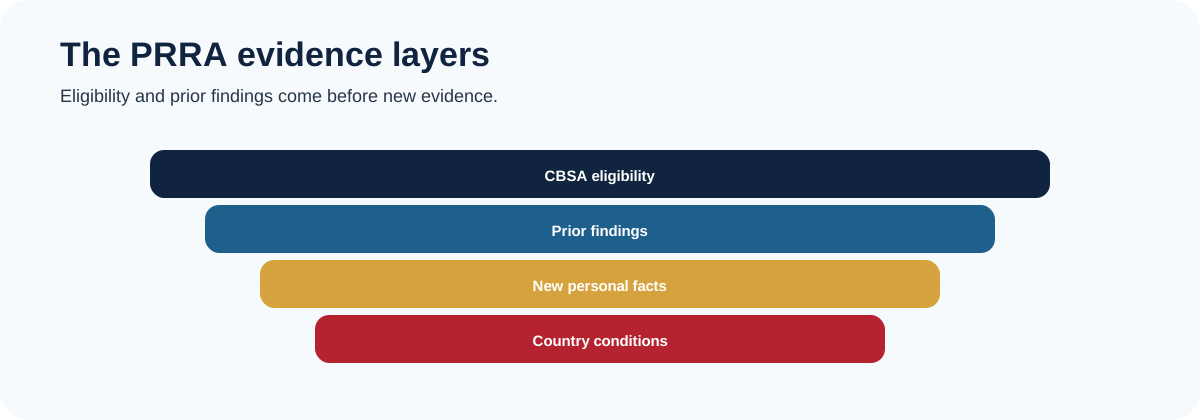
CBSA notice and deadline
What it needs to prove: That the person may apply and when the material is due.
What leaves questions: A removal interview date without the PRRA notice or package.
What answers them: Complete notice, forms, proof of receipt, removal documents and deadline calculation.
Prior protection record
What it needs to prove: What the RPD, RAD, court or earlier PRRA already decided.
What leaves questions: A summary of the old case based on memory.
What answers them: Written reasons, exhibits, hearing record and a finding-by-finding issue map.
New personal evidence
What it needs to prove: What changed after the earlier decision and why it matters now.
What leaves questions: A recent letter that simply repeats an old allegation.
What answers them: Dated, verifiable records with provenance and an explanation of prior unavailability.
Current country evidence
What it needs to prove: Whether the personal risk remains supported by objective conditions.
What leaves questions: Undated articles about another region or group.
What answers them: Reliable current reports linked to the applicant’s location, identity and alleged source of harm.
A composite example
A former claimant receives a PRRA notice after conditions worsen in his home region. He collects recent articles but does not obtain the RPD reasons. Several articles describe the same general conditions the RPD already considered.
The file is reorganized around the prior findings. A dated threat, a new arrest of a close associate and a current report are connected to the claimant personally. The submission explains when each item arose and why it was unavailable at the hearing. New publication dates alone do not make evidence legally new.
What will it cost?
IRCC does not list a government application fee for a PRRA. The person may still pay for certified translations, affidavits, medical or psychological reports, expert evidence and document retrieval. These costs depend on the record and are generally paid to the provider.
We quote after reviewing the CBSA package, deadline and prior protection record. See our fees and cost guide.
How long can it take?
The dates printed in the CBSA package control. IRCC states that an eligible person is generally not removed until they decline to apply, miss the deadline, withdraw or abandon, or receive a refusal. Do not treat that general statement as a substitute for the person’s enforcement instructions.
You control immediate delivery of the notice and prior record. IRCC and CBSA control processing and removal scheduling.

Why can a PRRA application be refused?
A refusal often starts with a question the records did not answer. A new application should address that reason with changed evidence, not simply send the same file again.
The person was not eligible to apply
How to address it: Use the CBSA notice and current bar or exemption rules before preparing the merits.
The application missed the stated deadline
How to address it: Record the receipt date and protect the deadline before trying to perfect every exhibit.
The evidence repeats an earlier claim
How to address it: Map the new evidence to the prior findings and explain its date and prior unavailability.
Country reports are not connected to personal risk
How to address it: Show why the reported conditions affect this person in this location.
Credibility problems remain unanswered
How to address it: Address each prior finding honestly with changed, reliable evidence where it exists.
What changed recently?
Rules and intake conditions can change. The application must use the requirements that apply on the day it is submitted.
IRCC updated the PRRA eligibility page
The current page keeps the CBSA eligibility gate, exclusions and 12-month waiting period with country exemptions.
Read the IRCC source ↗IRCC refreshed the PRRA overview
The published risk grounds remain persecution, torture, risk to life and cruel and unusual treatment or punishment.
Read the IRCC source ↗
What can you do yourself, and what can we do?
You can prepare and submit your own application. Professional help is useful when you want someone to test the evidence against the rules, identify gaps and put the scope in writing.
Do it yourself
You can complete a PRRA yourself after CBSA confirms eligibility. Begin with the notice, old reasons and a dated list of genuinely new facts. Keep personal and country evidence separate until each item is linked to an issue.
Use the assessment form only for the notice date and issue. Detailed protection facts require a confidential consultation.
Work with our office
Our RCIC-IRB can check the package and bar, review the earlier record, build the new-evidence analysis and prepare forms and submissions under a written retainer. We coordinate deadlines before research.
We do not accept every PRRA when the deadline leaves insufficient time, and we do not provide Federal Court advice.
Where our work stops: We cannot make CBSA declare a person eligible, extend a deadline or guarantee that removal will be deferred beyond the process IRCC describes.
PRRA questions
Can I apply for a PRRA before CBSA contacts me?
No. IRCC states that you may apply only after a CBSA officer confirms eligibility and gives you the application material.
How long is the PRRA deadline?
Use the dates in your CBSA package. Send the complete notice to your representative immediately because different forms and submissions may have stated dates.
Does the 12-month bar always apply?
No. The outcome and date matter, and IRCC publishes country-specific exemptions. CBSA still decides whether you are eligible.
Can I reuse my refugee claim evidence?
The prior record must be reviewed, but evidence that was already available can face restrictions. The application should explain what is new and why.
Will I be removed while PRRA is pending?
IRCC says an eligible person is generally protected from removal while the process remains active, subject to the stated events. Follow the instructions for your own enforcement file.
Can your office go to Federal Court after a refusal?
No. We refer Federal Court advice and representation to independent Canadian legal counsel.
Prepared for licensee review by: Mohammadreza Nosraty, RCIC-IRB R507271
Update review due. Immigration rules may have changed since this page was reviewed. Confirm the current requirements in the official sources below or book advice before acting.
Official sources
The pages we checked when we last reviewed this program.