

How we review it
Your documents come first
Here is what we look at, in order.
- 01
Immediate deadline review
Obtain the decision, written reasons, proof of receipt and any existing record before giving a preliminary view.
- 02
Jurisdiction and remedy
Confirm whether a RAD or IAD appeal is available and separate it from reconsideration, reapplication or possible judicial review.
- 03
Record and submissions
Develop evidence and written or oral advocacy that responds to the decision and complies with the division’s rules.
- 04
Authorized representation or referral
Represent before the IRB only within the authorized licence class; refer potential Federal Court proceedings promptly to independent Canadian legal counsel.
In plain terms
Which immigration decisions can be appealed?
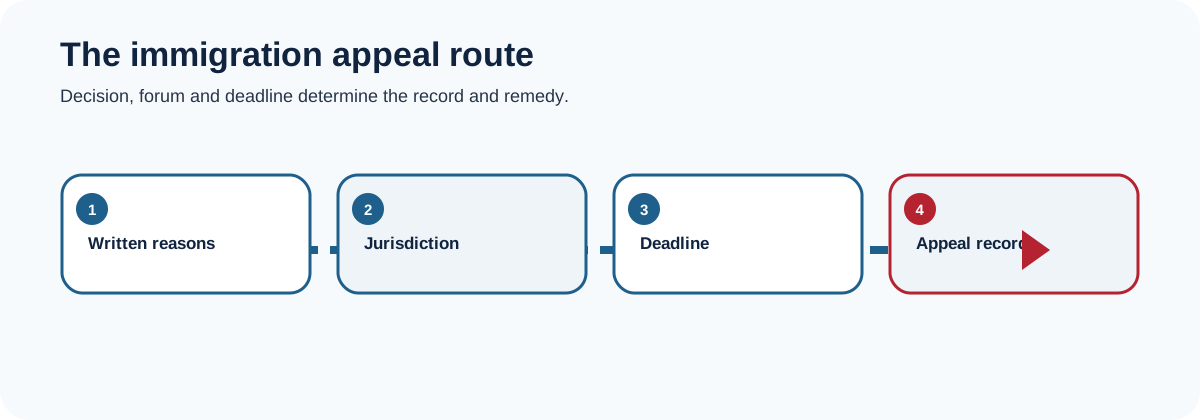
An immigration appeal starts with the decision, the forum and the deadline. The Refugee Appeal Division can review some negative RPD decisions. The Immigration Appeal Division hears certain sponsorship, removal-order and permanent-resident residency-obligation appeals. Other refusals have no IRB appeal and may require a new application, reconsideration or advice from a Canadian lawyer about Federal Court judicial review.
The notice protects the appeal right; the record explains why the decision should change. Repeating the original case is rarely enough. We read the written reasons, identify the alleged error and build the evidence and submissions around that issue.
Who is this for?
You received negative RPD reasons and need to calculate the RAD deadline. You sponsored a family member and IRCC refused the permanent-residence application. You are a permanent resident facing a removal order or a finding that you did not meet the residency obligation.
Not every refusal is appealable. A refused temporary visa or many economic applications need a different remedy. Start with the Program Status Board for intake questions, or ask independent Canadian legal counsel about Federal Court when no IRB appeal exists.
What does an immigration officer check?
The officer checks whether you meet the legal requirements and whether the records support the application you submitted.
Does the tribunal have jurisdiction?
The decision must carry a right of appeal to the RAD or IAD.
A decision letter, reasons and proof of receipt identify the forum and deadline. Statutory bars can remove appeal rights even when the subject looks similar to an appeal the tribunal normally hears.
Was the appeal filed on time?
A RAD notice is generally due within 15 days after receipt of the RPD written reasons, and the appellant record within 45 days.
The IAD uses the deadline stated for the particular appeal, commonly 30 days. Do not calculate from memory: preserve the delivery email, decision and instructions.
What error does the appeal identify?
The submissions must respond to the findings and the applicable standard, not simply tell the original story again.
A credibility finding, legal interpretation or overlooked record calls for a different argument. The reasons should be broken into findings, evidence and the requested remedy.
Can the tribunal consider new evidence?
New evidence is not automatically accepted, especially at the RAD.
The appellant must explain when the evidence arose, why it was unavailable earlier and how the applicable rule permits it. IAD evidence and humanitarian factors follow that division’s procedures.
Who may represent the appellant?
An authorized RCIC-IRB may represent before the IRB, but a consultant cannot give Federal Court legal advice or appear there.
When the remedy may be judicial review, we identify the limit and refer the person promptly to independent Canadian legal counsel.
What evidence makes the application easier to assess?
Good evidence answers a specific concern and agrees with the forms, dates and amounts elsewhere in the file.
Decision and deadline record
What it needs to prove: The available remedy and last day to protect it.
What leaves questions: A screenshot saying “refused” without the written reasons or delivery email.
What answers them: Complete decision, reasons, envelope or email headers, prior record and tribunal instructions.
Error map
What it needs to prove: Why the original decision may be wrong or should be changed.
What leaves questions: A statement that the decision was unfair with no reference to a finding.
What answers them: A table linking each challenged finding to the evidence, rule and requested remedy.
New evidence
What it needs to prove: A fact the tribunal may lawfully consider after the first decision.
What leaves questions: A new letter created after refusal that repeats earlier assertions.
What answers them: Reliable evidence with dates, provenance and an explanation of why it meets the admission test.
Humanitarian record at the IAD
What it needs to prove: The effect of the decision on family, establishment and other relevant circumstances.
What leaves questions: General hardship statements without witnesses or records.
What answers them: Tax, work, caregiving, medical, school and community evidence organized around the actual factors.
A composite example
A claimant receives RPD reasons on Friday and spends two weeks looking for a new country report. The report may help later, but the notice deadline arrives first.
The claimant files the notice within the stated period, obtains the hearing record and maps the credibility findings. Counsel then decides whether the new report can be admitted and explains why it was not reasonably available earlier. Protecting the appeal did not decide it; it kept the tribunal able to hear the case.
What will it cost?
The IRB process pages do not list a government filing fee for a RAD or IAD appeal. You may still pay for transcripts, translations, affidavits, expert evidence, medical reports and document service. Federal Court has a separate process and costs that a lawyer must explain.
We quote deadline protection, record review, written work and hearing representation after seeing the decision and file size. See our fees and cost guide.
How long can it take?
For a RAD appeal, the notice is generally due within 15 days after receipt of written reasons and the appellant record within 45 days. IAD deadlines depend on the appeal type and notice. You control immediate delivery of the full decision and prior record; the tribunal controls scheduling and decision time.
Use the current RAD instructions ↗ or IAD process ↗ for the file.

Why can an immigration appeal fail?
A refusal often starts with a question the records did not answer. A new application should address that reason with changed evidence, not simply send the same file again.
The appeal or record was filed late
How to address it: Calculate from proof of receipt and file the required extension application if a deadline was missed.
The tribunal has no jurisdiction
How to address it: Read the statutory appeal right before investing in an IRB record and obtain lawyer advice where needed.
The argument does not address the reasons
How to address it: Tie each submission to a specific finding, evidence and remedy.
New evidence does not meet the admission rule
How to address it: Explain timing, prior availability, reliability and relevance before asking the tribunal to consider it.
The humanitarian record is asserted but not proved
How to address it: Use witnesses and documents that show establishment, family effect, rehabilitation and hardship.
What changed recently?
Rules and intake conditions can change. The application must use the requirements that apply on the day it is submitted.
The published RAD deadlines remain 15 and 45 days
The IRB continues to state 15 days for the notice and 45 days for the appellant record, calculated from receipt of the written reasons.
Read the IRCC source ↗Consultant scope at Federal Court remains unchanged
The Federal Court states that an immigration consultant cannot represent a person or provide Federal Court legal advice.
Read the IRCC source ↗
What can you do yourself, and what can we do?
You can prepare and submit your own application. Professional help is useful when you want someone to test the evidence against the rules, identify gaps and put the scope in writing.
Do it yourself
You can file your own notice, request the record and prepare submissions. Start with the complete decision and proof of receipt. Keep a deadline sheet and read the division’s current rules before choosing evidence.
Use the assessment form only to identify the decision and deadline; do not send a full refugee narrative through it.
Work with our office
Our RCIC-IRB can assess jurisdiction, protect an IRB deadline under an agreed scope, review the record, prepare evidence and submissions and appear before the RAD or IAD. We tell you when the better next call is to a lawyer.
We do not provide Federal Court advice, create evidence after the fact or guarantee that a tribunal will accept new material.
Where our work stops: We will not describe every refusal as appealable or let an IRB retainer delay an urgent referral for Federal Court advice.
Refugee and immigration appeal questions
How long do I have to file a refugee appeal?
The IRB generally requires the notice within 15 days after you receive the written reasons and the appellant record within 45 days. Confirm the instructions for your decision immediately.
Can every RPD refusal be appealed to the RAD?
No. Statutory exclusions apply. The decision and claim history must be reviewed before relying on a RAD process.
Who files a sponsorship appeal?
The sponsor files the IAD notice, not the sponsored family member. Jurisdiction and any sponsorship bar still need review.
Can I add new evidence?
Sometimes, but the applicable rule controls whether the tribunal can accept it. The appeal should explain when it arose, why it was unavailable and why it matters.
Can your office take my case to Federal Court?
No. We refer Federal Court matters to independent Canadian legal counsel because consultants cannot advise or represent there.
What if I already missed the deadline?
Obtain urgent advice. The tribunal may consider an extension application, but the explanation and legal test matter and an extension is not guaranteed.
Prepared for licensee review by: Mohammadreza Nosraty, RCIC-IRB R507271
Update review due. Immigration rules may have changed since this page was reviewed. Confirm the current requirements in the official sources below or book advice before acting.
Official sources
The pages we checked when we last reviewed this program.